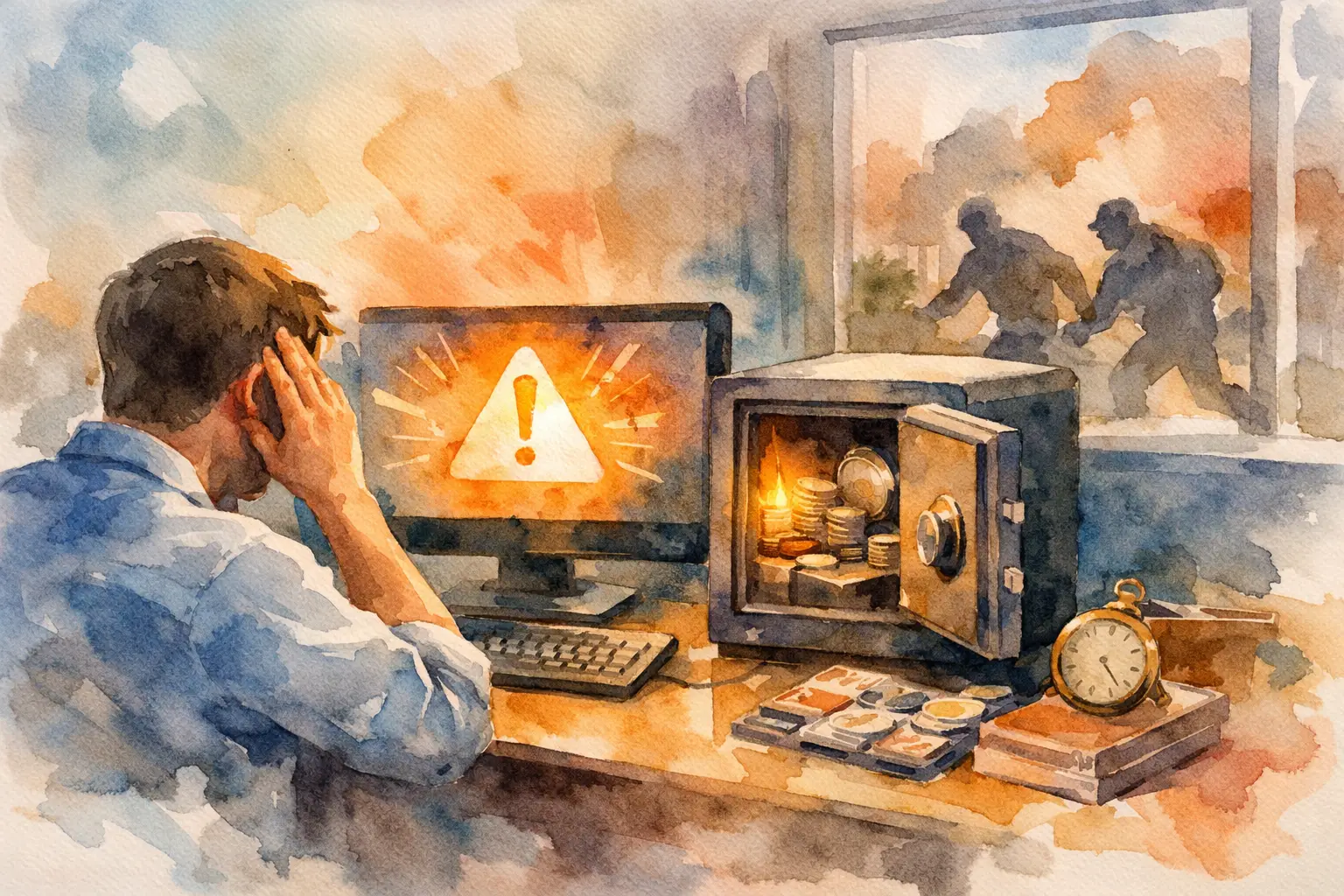
The difference between acquiring a rare work and hearing about it too late is often measured in hours, not weeks. A true collector saved by early alert example usually has less to do with luck than with timing - specifically, who saw the signal before the market did.
In high-value collecting categories, the most attractive opportunities rarely arrive with broad promotion. They appear in regional auction catalogs, estate sale postings, gallery updates with weak indexing, dealer inventory notes, and miscellaneous listings that standard search often misses or surfaces too late. By the time a piece is obvious, it is usually contested. That is why early visibility is not a convenience. It is an acquisition advantage.
Consider a buyer seeking a mid-century bronze sculpture by a named European artist with a defined size range, preferred casting period, and strict budget ceiling. This is not a casual browser. It is an informed collector who knows the artist's market, has passed on weaker examples, and is waiting for the right piece with the right provenance profile.
Using mainstream search methods, the buyer checks major auction platforms, general search engines, dealer newsletters, and a handful of saved searches. That approach sounds disciplined, but in fragmented markets it leaves wide gaps. Smaller houses often publish catalogs with inconsistent metadata. Estate-related listings may omit the artist's full name. A regional seller may use a generic category like "bronze figure" rather than the exact attribution terms a collector would search.
Now imagine a listing appears at a secondary auction house outside the usual circuit. The catalog entry is poorly titled, the photos are serviceable but not polished, and the artist attribution is present but not emphasized in the headline. The estimate is conservative because the house does not specialize in the category. For a serious buyer, this is exactly the kind of opportunity that disappears once better-informed participants notice it.
An early alert reaches the collector shortly after publication. Not after social promotion, not after trade chatter, and not after a competing advisor forwards it to a client. The buyer sees the object while the signal is still emerging.
That timing changes everything. Instead of reacting late, the collector has room to evaluate the foundry details, compare prior sales, request condition information, verify dimensions, and decide whether to pursue aggressively. There is time to arrange bidding strategy rather than improvising under pressure. More importantly, there is time before the listing becomes legible to everyone else.
This is the part many people miss. The alert did not merely help the collector find an object. It protected the collector from entering the opportunity at the most expensive moment.
Collectors often assume the problem is search quality. In reality, the deeper problem is market structure. Fine art and rare object markets remain fragmented, thinly indexed, and highly uneven in how information is published. That means even sophisticated buyers can miss listings simply because the underlying data is incomplete, delayed, or buried.
A standard search tool is usually built to retrieve what is already visible and well organized. Serious acquisition requires something else: monitoring newly published and weakly structured signals across sources that do not behave like clean retail databases.
That distinction matters because timing advantage compounds. The first qualified buyer to see an underexposed listing has more options. They can inquire quietly. They can perform diligence without signaling demand. They can decide whether a piece is truly right before broader competition forms around it. Once exposure widens, optionality shrinks.
For buyers in competitive markets such as postwar art, period furniture, rare design, sculpture, antiquities, or specialized decorative arts, this intelligence edge can be the difference between buying privately at a rational level and fighting through a price escalation that should never have happened.
A collector saved by early alert example is not only about securing a piece. It is also about avoiding four familiar costs that experienced buyers know too well.
The first is the missed acquisition. Some objects are simply not replaceable on any useful timeline. You can tell yourself another example will surface, but "another example" often means inferior condition, weaker provenance, later production, or a much higher price six months later.
The second is competitive inflation. Once multiple buyers identify an overlooked lot, value can change quickly. This is especially true when a specialist dealer, advisor, or category-focused collector enters late but decisively. Early discovery can keep a purchase in the zone of disciplined bidding rather than emotional recovery.
The third is rushed diligence. Late discovery compresses judgment. Instead of researching calmly, the buyer is forced into a series of fast calls, partial checks, and uncomfortable assumptions. In categories where attribution nuance and condition history matter, compressed diligence is expensive.
The fourth is strategic distraction. Sophisticated collectors do not want to spend their week chasing noise. They want qualified opportunities surfaced early enough to make a measured decision. An effective alert system saves attention as much as money.
Not every alert has value. Many are just notifications dressed up as intelligence. For an early alert to matter, the system behind it must do more than watch obvious marketplaces.
It needs to scan fragmented sources continuously, interpret inconsistent naming conventions, and recognize that desirable objects are often described imperfectly. It also needs to respect the collector's actual brief. A buyer looking for a specific artist, period, material, scale, and price band does not benefit from broad noise. Precision matters because speed without relevance is just distraction.
This is where proprietary scanning technology changes the equation. When an intelligence platform is built to detect emerging signals across obscure and poorly indexed channels, it can surface opportunities before mainstream visibility catches up. That is a meaningful advantage for collectors who compete on timing.
Used properly, the system feels less like search and more like market surveillance. The collector is not endlessly hunting. The collector is positioned to receive targeted intelligence when the market reveals something actionable.
The pattern is especially clear in markets where reputation and visibility are uneven. A small house in the Midwest, a local estate sale in Florida, or a regional gallery update in Europe may present an object that would draw immediate attention if handled by a more prominent venue. Serious buyers in places like Palm Beach, the Upper East Side, Beverly Hills, or Mayfair already understand this dynamic. Geography does not reduce competition. It broadens it.
In fact, affluent collecting centers often intensify the need for earlier signals because buyers there are not competing only with neighbors. They are competing with private advisors, cross-border dealers, designers sourcing for clients, and collectors who maintain standing watchlists across categories.
That is why information latency matters. If your intelligence arrives after the object is circulating widely, you are not early. You are merely informed at the same time as everyone else.
There is another layer to the collector saved by early alert example that deserves attention: privacy. Serious collectors do not want their interests turned into marketing profiles or broker inventory. They want discreet monitoring aligned with their acquisition goals, not a system that monetizes their intent.
That alignment changes the relationship. A platform working for the subscriber rather than intermediaries can focus on one thing: surfacing relevant opportunities quickly and quietly. For experienced buyers, that matters. The more valuable the target category, the more costly it becomes when your demand signals leak into the market.
This is one reason services such as Orpheus Art Alerts appeal to acquisition-minded collectors and professionals. The value is not theatrical personalization. It is disciplined discovery across fragmented markets, delivered early enough to act.
The lesson is not that every alert leads to a purchase. It is that early visibility restores control. It gives the collector time to think clearly, verify quality, and decide from a position of strength.
That may result in a successful bid. It may also result in a disciplined pass after proper review. Both outcomes are valuable. The expensive mistake in collecting is not always overpaying. Sometimes it is operating with delayed information and mistaking urgency for conviction.
The best collectors understand that acquisition quality begins before valuation, before negotiation, and before bidding. It begins at discovery. When a market is fragmented, discovery is strategy.
If you are consistently seeing opportunities only after they feel obvious, the issue is not your judgment. It is your timing infrastructure. And in this market, better timing is often the quiet factor that saves the collector long before anyone else realizes there was something to save.
